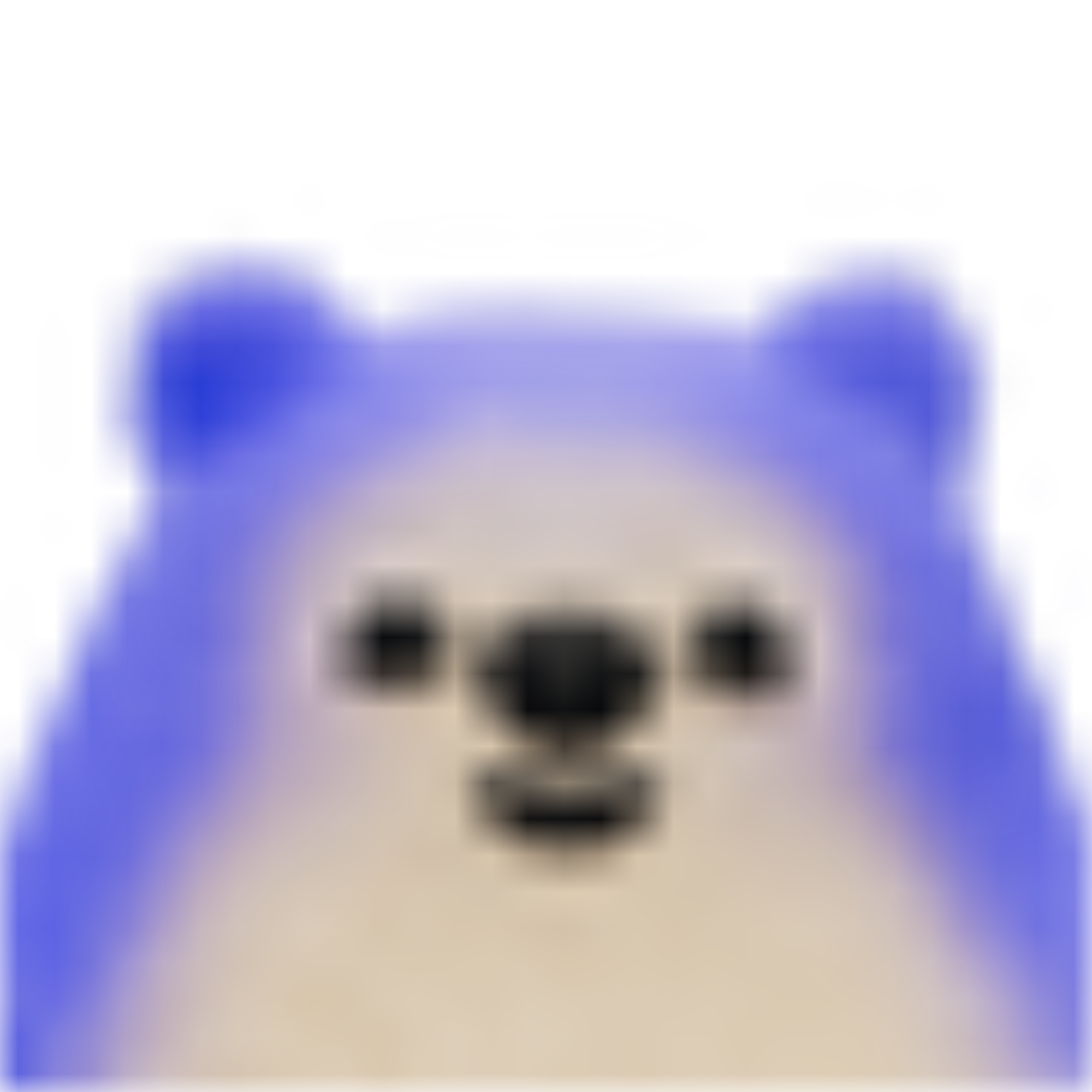
How our mascot came to life
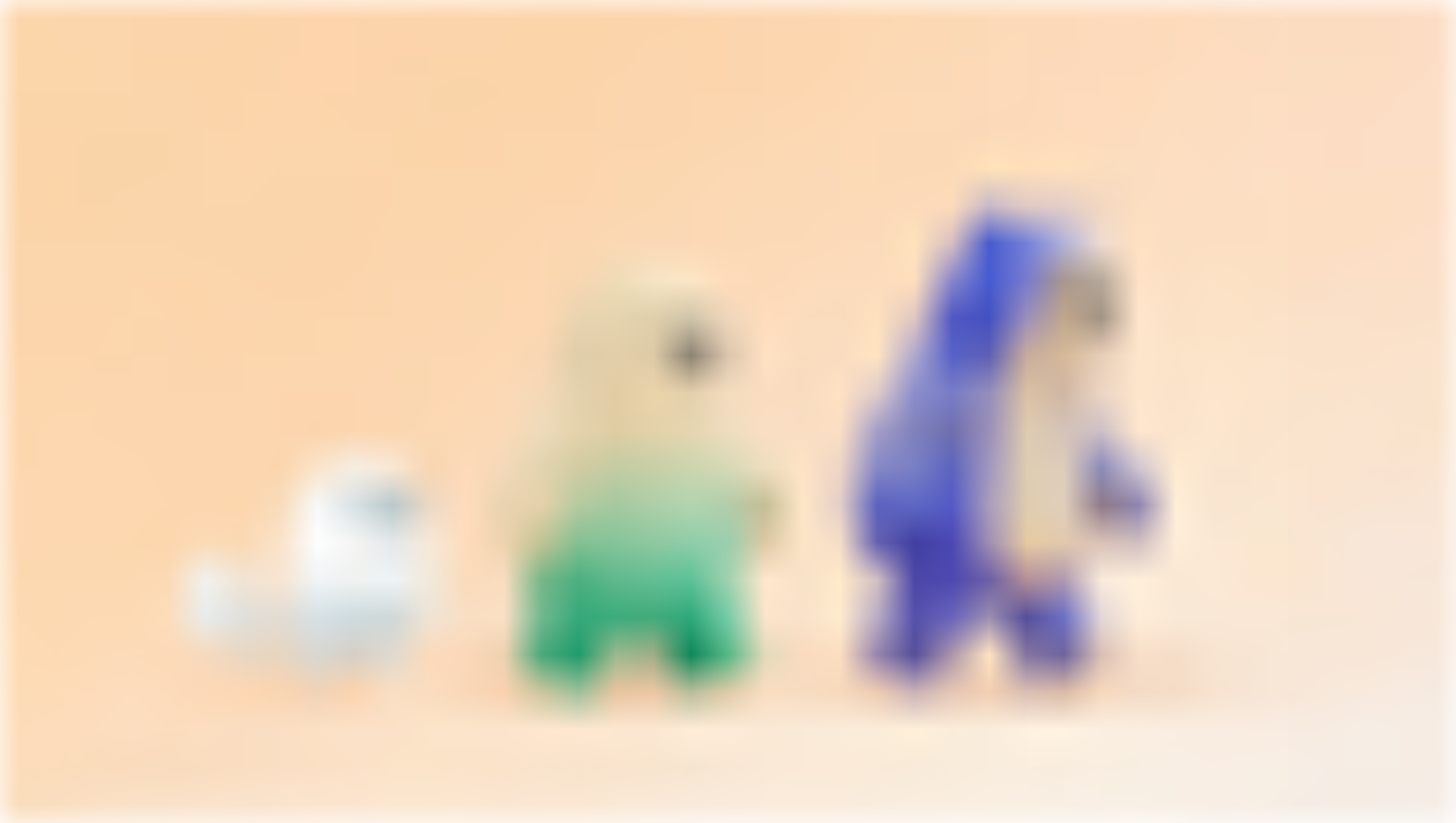
There's something magical about watching a character come to life. Not in the Disney sense (though we've certainly borrowed from that playbook) but in the way a simple illustration becomes a companion, a friend, a symbol of something much bigger than itself.
Our mascot started as a few curves in Illustrator. Today, it's the face of health for thousands of people.
This is the story of how we got here, and why it matters.
Act I: 2016, a marmot walks into a health company
Picture this: you're launching a health insurance company in France. The industry is known for being cold, bureaucratic, and dare we say: a bit soul-crushing.
Alan has a different idea. What if healthcare could feel like a friend checking in on you? What if seriousness and playfulness weren't enemies, but partners?
We called it profound levity: give people the answers they need with the warmth they deserve.
Enter: the marmot.
Why a marmot? Well… that's a secret we'll never tell… but I love that it wasn't the obvious choice. Not a teddy bear, not a heart, not a cute stethoscope with eyes. A marmot, slightly quirky, undeniably charming, with this expression that somehow communicated both "I've got you" and "let's not take ourselves too seriously." It was never meant to be realistic. It was meant to be ours. Over nearly a decade, Alan's beloved marmot has transformed from a simple 2D logo into a sophisticated 3D avatar system. Each version of the marmot tells you something about where Alan was at the time. A little rough at first, finding our feet, then more confident, more considered, more ourselves.
By 2021, we had a problem. Not with the marmot itself, but with how it was being used: barely at all.
Product teams wanted to use the mascot in more contexts but hit constant technical walls. Marketing wanted dynamic campaign assets but kept running into rendering issues. Designers wanted to experiment with new poses and expressions, but its visual treatment made every variation an ordeal.
So our marmot appeared here and there, in limited contexts, doing limited things.
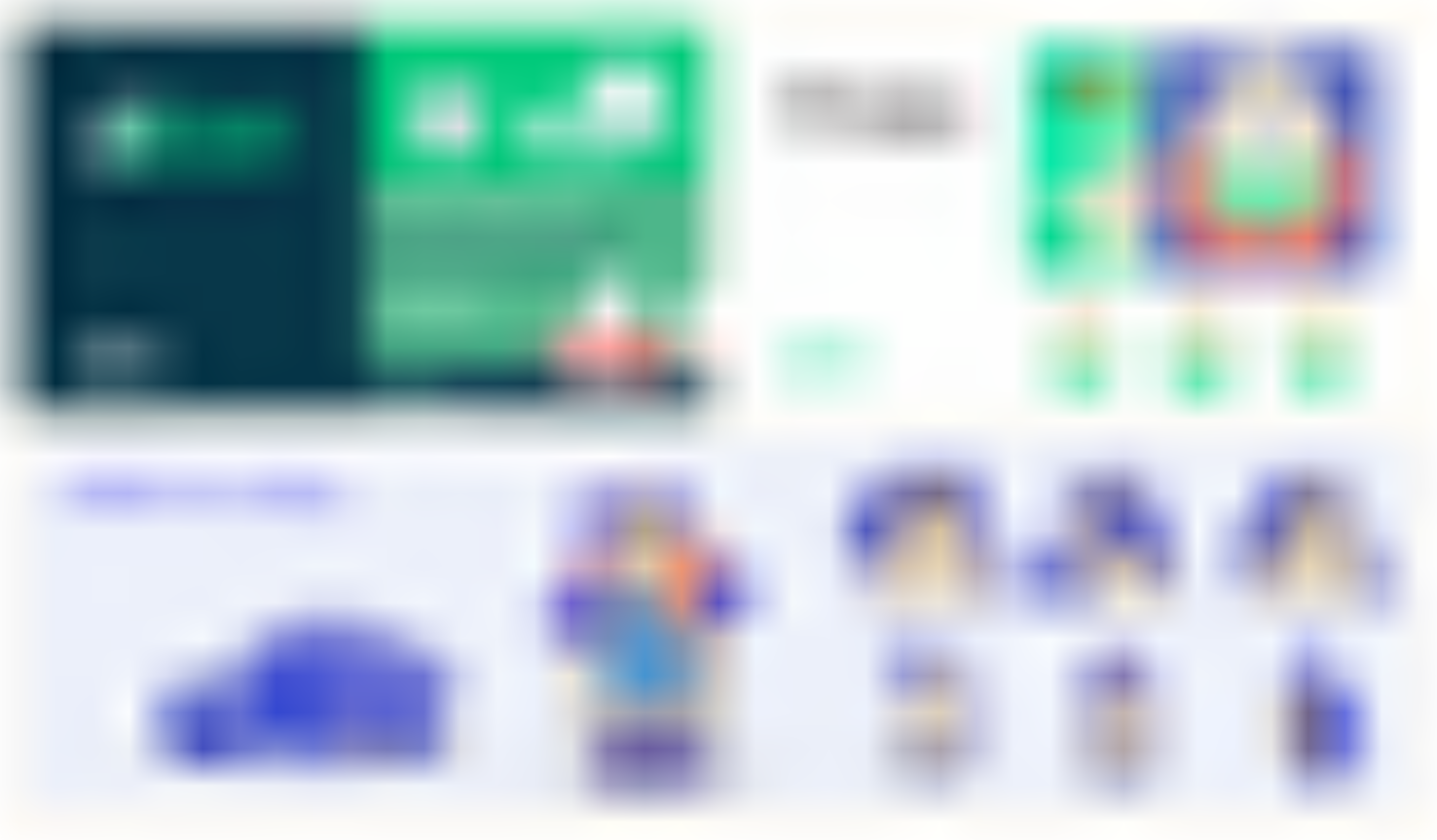
At the same time, Alan was evolving beyond health insurance toward becoming a comprehensive health partner. That mission shift demanded a visual rebrand: warmer colors, a more welcoming presence, a character that said "companion," not "coverage." The shift from a partial, floating character to a full, memorable mascot. So, in true Alan fashion, we made a bit of a radical choice: we moved to 3D.
The goal wasn't just to solve a production problem. We wanted the marmot to feel more alive. The 2D marmot was charming, but it floated. It lacked weight, warmth, the sense that it was actually there with you. We needed this mascot to feel like someone you'd want by your side, not just a logo that popped up on a screen.
The 3D look gave us that. But finding the right sweet spot? That was its own journey. Too realistic and our mascot became unsettling. Too simple and it lost the maturity and reliability we needed. We went through several iterations, testing clay textures, different fur styles, before landing on something that felt soft enough to be warm, playful enough to be ours. It's the softness of its fur. The sense of volume and presence that made it feel, somehow, more real. A mascot you want to hug.
And cherry on the cake, it also unlocked the production flexibility we needed: one core model, infinite variations, the same character showing up consistently across every context.
The non-negotiable was: its "default" face stays identical. That expression is our logo. It's the bridge between brand identity and mascot personality, and it doesn't move. But that constraint, rather than limiting us, forced us to innovate everywhere else.
Act III: 2025, giving it back to the whole company
Even with 3D, one friction remained. Every new pose, every new context, still required a 3D designer. High cost, long timelines, a queue of requests. The marmot was more expressive than ever, but still gatekept. For years, our marmot mostly lived with us, designers. It showed up when the team had capacity, not when the rest of the company had an idea.
It's a bit like having a really great cookbook you never cook from. The recipes are there, the potential is real, but if it's too intimidating to open, it just sits on the shelf looking nice.
Then we trained an internal AI model, and everything changed.
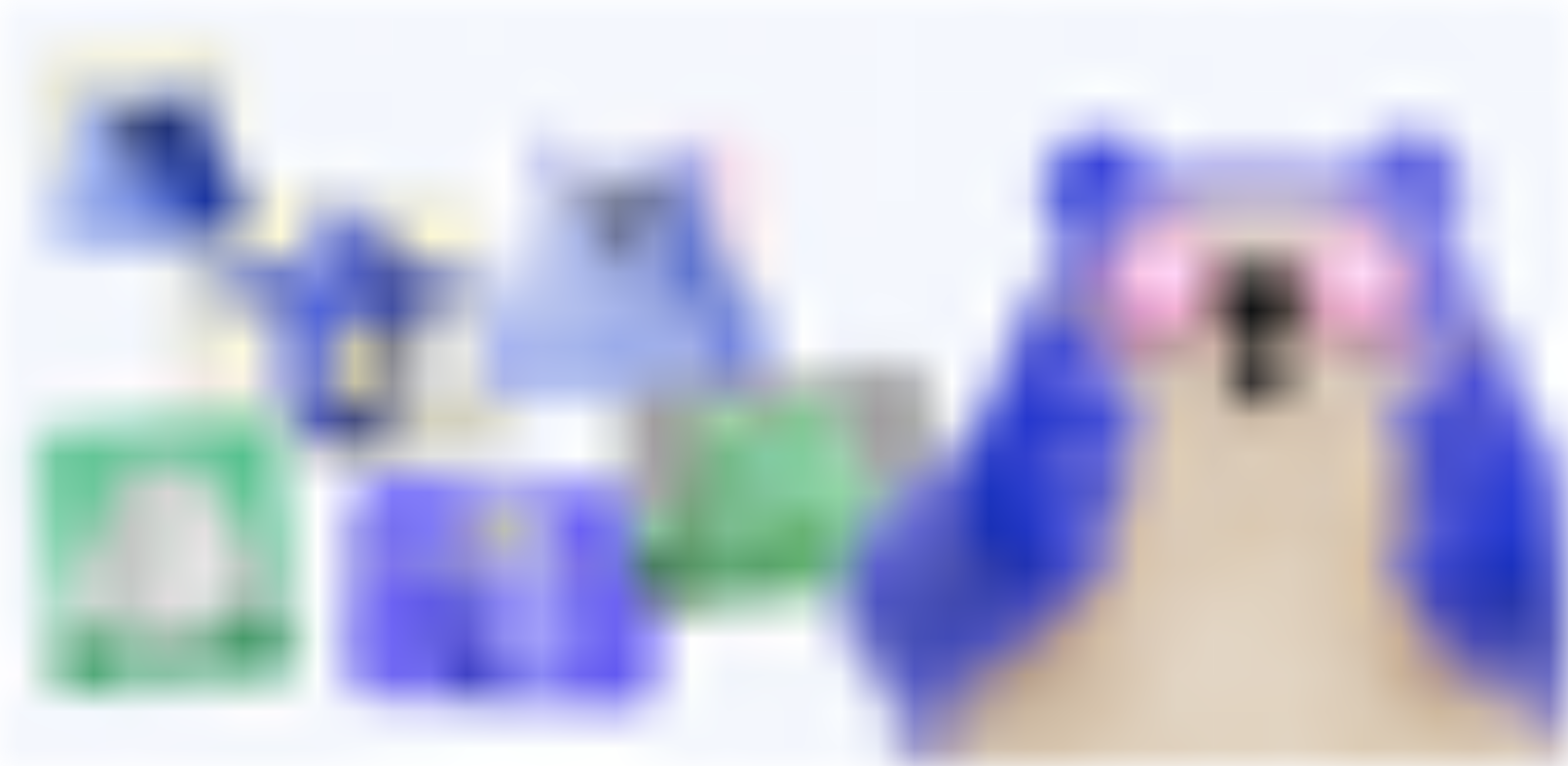
The model understands our system's rules: the face stays consistent, the proportions stay recognizable, the personality stays true. Within those guardrails, anyone at Alan can now generate a contextual marmot variation. A product manager can request a marmot celebrating a health milestone without filing a design ticket. A content writer can generate a supportive pose for a sensitive health moment. A marketer can create a seasonal variation for a campaign, today, not the next sprint.
And something shifted almost immediately. The marmot started showing up in product flows, in support messages, in little celebratory moments we hadn't even thought to design for.
The more it appeared, the more this mascot felt real to people. Not just as a brand asset but as a presence and companion.
This is what distributed ownership looks like in practice. The marmot no longer lives in the design team's Google Drive. It truly belongs to the whole company.
Which brought us to something we maybe should have known from the start: memorability isn't built through perfect illustrations. It's built through familiarity. The more she shows up, the more she becomes more than "Alan's mascot", but also how Alan feels. When the whole company feels ownership over a character, that character stops being a design deliverable and starts being part of the culture.
What we'd tell our past selves
Looking back at nearly a decade of evolution, here are the principles that enabled our mascot to grow with us, and what we'd share with anyone building a character system for their brand:
- Start with a feeling, not a brief. Before you open any design tool, know what emotion you're trying to create. "Lightness, caring, fun-but-not-comical" is still, as of today a fuel for all our design decisions. Your character should answer to your brand values, not define them.
- Democratize your mascot. Make it easy for non-designers to use it. It should belong to the whole company, not live in the design team's google drive. Let everyone bring the character to life in their work: when marketing, product, and support teams can all use your mascot fluently, that's when it becomes truly embedded in your culture and brand.
- Consistency isn't about looking identical everywhere. It's about feeling the same everywhere.
What about you? If your mascot could talk, what would it say about where your brand is today?
Updated on 20/03/2026
Published on 20/02/2026
Author

Tiphaine Gillet
Brand Designer
Updated on
20 March 2026
Your health partner
You, better.